


Mostrando entradas con la etiqueta contemporary. Mostrar todas las entradas
Mostrando entradas con la etiqueta contemporary. Mostrar todas las entradas

Arnold Schoenberg / Pierrot Lunaire
10 abril 2009 |
|
0
comentarios
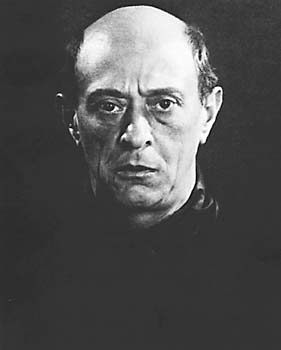
Dreimal sieben Gedichte aus Albert Girauds 'Pierrot lunaire', ("three times seven poems from Albert Giraud's 'Pierrot lunaire'"), commonly known as Pierrot Lunaire ("Moonstruck Pierrot" or "Pierrot in the moonlight"), Op. 21, is a melodrama by Arnold Schoenberg. It is a setting of twenty-one selected poems from Otto Erich Hartleben's German translation of Albert Giraud's cycle of French poems of the same name. The première of the work, which is between 35 and 40 minutes in length, was at the Berlin Choralion-saal on October 16, 1912, with Albertine Zehme as the vocalist.
The narrator (voice-type unspecified in the score, but traditionally performed by a soprano) delivers the poems in the Sprechstimme style, which complements the mood of the poems aurally. Schoenberg had previously used this combination of spoken text with instrumental accompaniment, called "melodrama", in the summer-wind narrative of the Gurre-Lieder, and it was a genre much in vogue at the end of the nineteenth century. The work is atonal, but does not use the twelve-tone technique that Schoenberg would devise eight years later.
There was some criticism of blasphemy in the texts, to which Schoenberg responded, "If they were musical, not a single one would give a damn about the words. Instead, they would go away whistling the tunes".
Karlheinz Stockhausen / Elektronische Musik
01 abril 2009 |
|
0
comentarios

A great collection of Stockhausen's classic and well-crafted electronic music. An electronic composition realized on tape during the years 1955-1956, "Gesang der Jünglinge" is perhaps the best-known of Stockhausen's compositions. It was originally scored for five loudspeaker groups, but has been most widely heard in the mono and stereophonic versions prepared for vinyl records by the composer. The basic sound and emotional image described by the title is that of the well-known story of the youths who miraculously survive being thrown into the fiery furnace, from the Bible, Book of Daniel, chapter three. Stockhausen successfully combines the sound of the natural sung voice with beautiful electronic sound, in what today would be termed audio-morphing, as the voice and electronic tones subtly interchange and blend. "Wherever the music's audible signals momentarily become human speech, it is always in the praise of God" (Stockhausen).
Steve Reich, Music for 18 musicians
27 marzo 2009 |
|
0
comentarios

If Steve Reich's Music for 18 Musicians is simply described in terms of its materials and organization — 11 chords followed by 11 pieces built on those chords — then it might seem utterly dry and monotonous. The actual music, though, is far from lackluster. When this recording was released in 1978, the impact on the new music scene was immediate and overwhelming. Anyone who saw potential in minimalism and had hoped for a major breakthrough piece found it here. The beauty of its pulsing added-note harmonies and the sustained power and precision of the performance were the music's salient features; and instead of the sterile, electronic sound usually associated with minimalism, the music's warm resonance was a welcome change. Yet repeated listening brought out a subtle and important shift in Reich's conception: the patterns were no longer static repetitions moving in and out of phase with each other, but were now flexible units that grew organically and changed incrementally over the course of the work. This discovery indicated a promising new direction for Reich, one that put him ahead of his peers by giving his music greater interest and adaptability and led to the more elaborate works of the next two decades.
Bernard Parmegiani, L´oeil écoute
|
|
0
comentarios

An enduring reflection of the essence of time perceptible in its own right, can be established through the act of intimate listening where the self becomes immersed in re-living the experience of a journey or the immortalised passing of something disclosed as streaming images. As with all concrete music composers B. Parmegiani yields to this charm and in his works, it takes on the forms of continuous temptation marked throughout by a sense of the forbidden and by a certain fear. The listener is brought to wonder whether the composer actually intended to finish once and for all with the power of Orpheus.
In any case the train emerges as mans best friend and so it is here for Parmegiani the musician exploring and recasting dreamlike intricacy. Both through the effect of continuum and streaming images time is transformed into space literally transporting us.
In any case the train emerges as mans best friend and so it is here for Parmegiani the musician exploring and recasting dreamlike intricacy. Both through the effect of continuum and streaming images time is transformed into space literally transporting us.
Terry Riley, Rainbow in Curved Air
25 marzo 2009 |
|
0
comentarios

After several graph compositions and early pattern pieces with jazz ensembles in the late '50s and early '60s (see "Concert for Two Pianists and Tape Recorders" and "Ear Piece" in La Monte Young's book An Anthology), Riley invented a whole new music which has since gone under many names (minimal music — a category often applied to sustained pieces as well — pattern music, phase music, etc.) which is set forth in its purest form in the famous "In C" (1964) (for saxophone and ensemble, CBS MK 7178). "Rainbow in Curved Air" demonstrates the straightforward pattern technique but also has Riley improvising with the patterns, making gorgeous timbre changes on the synthesizers and organs, and presenting contrasting sections that has become the basic structuring of his works ("Candenza on the Night Plain" and other pieces). Scored for large orchestra with extra percussion and electronics, some of this work's seven movements are: "Star Night," "Blue Lotus," "The Earth Below," and "Island of the Rhumba King."
¡¡¡¡¡¡¡¡¡¡¡¡¡¡¡¡¡¡¡¡¡¡¡¡¡¡¡¡¡¡¡¡¡¡¡DOWNLOAD!!!!!!!!!!!!!!!!!!!!!!!!!!!!!!!!!!!!!!!
Philip Glass, Wendy Sutter (cello), Songs and poems for solo cello
|
|
0
comentarios

Songs and Poems for Solo Cello represents the solo recording debut of cellist Wendy Sutter featuring two world premieres. Premiered in 2007, Songs and Poems for Solo Cello is a seven-movement work by American composer Philip Glass. Known for large-scale theater works, film scores, concertos and symphonies, Songs and Poems for Solo Cello shows the composer at his most intimate. Also featured on the disc, Tissues, composed for the film Naqoyqatsi, are works written for cello, percussion and piano. Wendy Sutter is an internationally acclaimed soloist, most recently making for US premiere as soloist for the Philip Glass Cello Concerto. The cellist is also known as a long-time member of Bang on a Can All Stars. Songs and Poems for Solo Cello was recorded on the 1620 Ex-Vatican Stradivari.
Sofia Gubaidulina, Stimmen... Verstummen
19 marzo 2009 |
|
0
comentarios

Stimmen... Verstummen... is a symphony in twelve movements by Russian-Tatar composer Sofia Gubaidulina. It was written in 1986 and dedicated to the conductor Gennady Rozhdestvensky, who gave the first performance in West Berlin with the Moscow State Symphony Orchestra on September 4, 1986. It takes the two words of its title from a poem by Francisco Tanzer.
Stimmen... Verstummen... is primarily organized around two themes. The first is that of a major triad, occurring as D-major in the first, third, and fifth movements and as a G-major triad in the tenth and twelfth movements. The second theme, that of "effort and ruin", occurs in the second, fourth, and sixth movement. Movements I, III, V, and VII become progressively shorter according to the proportions of the Fibonacci sequence.
The symphony is notable for its careful and innovative use of silence. Though the eighth movement has the largest porportions of the work, the climax actually takes place in the ninth movement when the conductor motions before a silent orchestra. The motions the conductor makes are meant to make his hands move increasingly farther apart from each other according to the Fibonacci sequence. This "conductor solo" is repeated at the end of the work, when after the last note is sounded the conductor continues to motion for several minutes.
Stimmen... Verstummen... is primarily organized around two themes. The first is that of a major triad, occurring as D-major in the first, third, and fifth movements and as a G-major triad in the tenth and twelfth movements. The second theme, that of "effort and ruin", occurs in the second, fourth, and sixth movement. Movements I, III, V, and VII become progressively shorter according to the proportions of the Fibonacci sequence.
The symphony is notable for its careful and innovative use of silence. Though the eighth movement has the largest porportions of the work, the climax actually takes place in the ninth movement when the conductor motions before a silent orchestra. The motions the conductor makes are meant to make his hands move increasingly farther apart from each other according to the Fibonacci sequence. This "conductor solo" is repeated at the end of the work, when after the last note is sounded the conductor continues to motion for several minutes.
"I am a religious person...and by 'religion' I mean re-ligio, the re-tying of a bond...restoring the legato of life. Life divides man into many pieces...There is no weightier occupation than the recomposition of spiritual integrity through the composition of music." — Sofia Gubaidulina
The Kronos Quartet, Pieces Of Africa
|
|
0
comentarios

When released, Pieces of Africa was subject to some of the same "cultural imperialist" criticism that had been more successfully leveled at performers like David Byrne and Paul Simon. The album consists of commissions from African composers working at varying distances from European conventions. But whereas Byrne and Simon arguably used the music of Brazil or South Africa as backgrounds over which to display their own egos, the Kronos Quartet's members managed to sublimate themselves in service to the compositions, never giving the listener any sense of condescension. All of which is to say that Pieces of Africa is a very beautiful recording with several superb individual works. Zimbabwe's Dumisani Maraire's opening piece, "Mai Nozipo," with the composer accompanying the quartet on drums, is a rousing, triumphant anthem with a resonant melodic line that will long linger. Thematically, most of the pieces draw on African sources, very clearly in the case of the Arabic-infused songs of Hassan Hakmoun and the great Sudanese composer Hamza el Din. Unsurprisingly, South African Kevin Volan's "White Man Sleeps" comes closest to European traditions, though even this piece, which is gorgeous and inspired throughout, draws inspiration from native environmental sounds. The disc closes with another composition by Maraire, with an accompanying gospel choir making explicit the link between Africa's music and that of the American South. Pieces of Africa teems with beguiling melodies, making it one of this quartet's more accessible projects and also one of its best.
Iva Bittova - Bang On A Can, Elida
02 marzo 2009 |
|
0
comentarios

Words like "approachable" and "engaging" are rarely invoked when describing the work of so-called avant-garde musicians, and it sometimes seems true that avant experimentalists bend over backwards to push mainstream listeners away rather than welcome them. Not so Iva Bittová, a composer, violinist, and vocalist who proves that the avant-garde can be broadly appealing without compromising its adventurous spirit. On Elida, Bittová succeeds in humanizing the Bang on a Can All-Stars, that collective of New Yorkers often primarily noted for mind-boggling technical skills when tackling the formidable minimalist and post-minimalist works of modern composers like Louis Andriessen and the Bang on a Can collective's own Michael Gordon. Here, a six-piece incarnation of the All-Stars is her backing band, and the musicians prove to be ideally suited to the task, a dose of Bittová's Czech folk, chamber music, and cabaret proving the ideal formula to reveal their softer and more intimate sides. The album follows a thoughtful and well-conceived trajectory, with Bittová's shouting, babbling, and skittering vocals making an early entrance on "Malíri V Parízi" (Painters in Paris) but seeming to slide gracefully into a mature beauty before the listener's ears as the album progresses, although she never completely abandons her childlike playful qualities.
Elida is an essential release in Iva Bittová's catalog, and a fine introduction to her music for those unfamiliar with her.
Renaud Garcia-Fons, Jean-Louis Matinier
25 febrero 2009 |
|
0
comentarios

Evoking memories from a simpler time, bassist Renaud Garcia-Fons and accordionist Jean-Louis Matinier sing beautiful melodies through their instruments, supplemented by finely structured improvisations. The collaborations of Grappelli and Reinhardt come to mind, but only as influences, as the instant duo uses dramatic rhythmic touches, a more Eastern European feel, perhaps, and a Spanish or Latin influence to create something different.
There is an insistent jazz influence, or style, that permeates the whole, but the pieces are all originals, relying more on the unique rhythms than on any simple formula of heads and variations on themes. Some of the slower tunes, such as "Perpetua," feature an almost mournful, though majestic, solitude in which the soaring accordion imitates a violin, and the bass appears to be strummed like a guitar. In their notes, the musicians correctly compare their creations to that of a symphonic orchestra, the permutations of sound being broadly diversified within a traditional framework.
Joshua Redman Elastic Band - Momentum
17 febrero 2009 |
|
0
comentarios

A show of Soul and virtuosity by the means of modern saxophone-playing.
SoundsLike: Jazz-Funk, SexySaxPlaying
Philip Glass, Koyaanisqatsi
|
|
0
comentarios

Ko.yaa.nis.qatsi (from the Hopi language), n. 1. Crazy life. 2. Life in turmoil. 3. Life disintegrating. 4. Life out of balance. 5. A state of life that calls for another way of living.
I had happened upon Philip Glass, strolling along upper Broadway, and he invited me in to hear some new music. He dropped the cassette into his player and turned up the volume. A solemn passacaglia scored for the deepest registers of the organ began, gradually augmented by churchy arpeggios. Finally, an impossible dark, sepulchral voice began to sing/croak the Hopi word Koyaanisqatsi (Ko-YAWN-is-SCOTS-ee).
I was impressed; it was like nothing else I'd ever heard, not even from Glass. "This is music that might conceivably have been written at any period in history," Glass explained as the movement progressed. "I find this sort of 'ahistory' very interesting. The harmonies are spare and consonant, the arrangement is starkly simple. And yet it's new, don't you think?"
I was impressed; it was like nothing else I'd ever heard, not even from Glass. "This is music that might conceivably have been written at any period in history," Glass explained as the movement progressed. "I find this sort of 'ahistory' very interesting. The harmonies are spare and consonant, the arrangement is starkly simple. And yet it's new, don't you think?"
Tim Page
Vinny Golia, George Lewis, Bertram Turetzky
14 febrero 2009 |
|
0
comentarios

Triangulation is an intriguing trio combination. Multi-reed master Vinny Golia and trombonist George Lewis seem an obvious enough match, both having worked with Anthony Braxton and sharing a musical approach that at least overlaps in part. Bassist Bertram Turetzky, however, is better known as an outstanding contemporary classical interpreter of modern music for the double bass, so his appearance on the freely improvised session is something of a surprise, though a very pleasant one. Golia, one of the rare regular practitioners of the bass sax, spends a good bit of time with that unwieldy axe, conjuring up dark, rich soundscapes in tandem with Turetzky's brooding arco work. Lewis is his typical fleet self in upper and lower registers, dancing gamely between his partners and providing some of the finer single moments on the album. Creative improv album and one that fans of any of the participants are likely to savor.
Francois Rabbath, Live Around the World
12 febrero 2009 |
|
0
comentarios
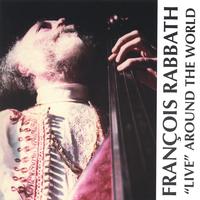
Every now and then, just when you thought you had things all neatly arranged in their proper order, someone comes along and not only upsets everything you've done, but demands that you change your entire way of thinking before you can even begin to put them back together again. François Rabbath is one of those people.
1 POUCHA-DASS. Raga inspired by the sound of the Indian Sitar.
2 ORDIS. In homage to Paganini and dedicated to Louis Gilbert
3 REITBA. Inspired by the magic of the African desert.
4 DESERT. The first composition of Rabbath. Inspired by the Jazz of the 60’s.
5 IMPALAS. The bouncing run of the gazelles.
6 ODE D’ESPAGNE. In the style of the Spanish guitar.
7 LA GUERRE ET LA PAIX. War and Peace, parts 3 and 4. Written for the celebration of Pablo Picasso’s 90th birthday, October 24, 1971 and Vallauris, France.
8 PRADES. In homage to Pablo Casals
9 KOBOLDS. The dancing gnomes playing music.
10 CRAZY COURSE. The crazy chase
11 IBERIQUE PENINSULAIRE or ESPOIR. Dedicated to Paco Ibanez in memory of the great Chilian poet Pablo Neruda, the third “Pablo” to die in 1973.
12 QUATION DU TEMPS. The measure of time.
13 CONCERTO NO.1. For solo double bass
14 ETE QUATE. Seven Four
15 BRIEZ. A study in electro-acoustic sonorities produced with the bow by natural and artificial harmonics.
16 CONCERTO NO.2
2 ORDIS. In homage to Paganini and dedicated to Louis Gilbert
3 REITBA. Inspired by the magic of the African desert.
4 DESERT. The first composition of Rabbath. Inspired by the Jazz of the 60’s.
5 IMPALAS. The bouncing run of the gazelles.
6 ODE D’ESPAGNE. In the style of the Spanish guitar.
7 LA GUERRE ET LA PAIX. War and Peace, parts 3 and 4. Written for the celebration of Pablo Picasso’s 90th birthday, October 24, 1971 and Vallauris, France.
8 PRADES. In homage to Pablo Casals
9 KOBOLDS. The dancing gnomes playing music.
10 CRAZY COURSE. The crazy chase
11 IBERIQUE PENINSULAIRE or ESPOIR. Dedicated to Paco Ibanez in memory of the great Chilian poet Pablo Neruda, the third “Pablo” to die in 1973.
12 QUATION DU TEMPS. The measure of time.
13 CONCERTO NO.1. For solo double bass
14 ETE QUATE. Seven Four
15 BRIEZ. A study in electro-acoustic sonorities produced with the bow by natural and artificial harmonics.
16 CONCERTO NO.2
Conlon Nancarrow, Studies and solos
|
|
0
comentarios

One aspect of the polymorphously polyrhythmic music of Conlon Nancarrow is its lack of practicality in live performance. Nancarrow didn't have, in his time, access to electronics, and as his interest in hearing multiple levels of rhythmic activity increased he turned to the only medium capable of delivering the goods — the pneumatic technology of the player piano, driven by the "digital software" of a paper roll punched by hand. About the time his work began to gain attention, Nancarrow started to receive commissions for works from real, flesh-and-blood players. Ten of Nancarrow´s studies are heard combined with six other works written for human players. Three Two-Part Studies, Prelude, Blues, and Sonatina are early works from the 1930s and '40s, and the Three Canons for Ursula and Tango? are late works. The obvious benefit that human intervention brings to the table in these pieces is a sense of touch and expression. Nancarrow's modified player pianos were capable of delivering discretion between soft and loud, but there was little they could achieve in terms of any gradations in between. The Bugallo-Williams Piano Duo demonstrates that there is a lot to experience in Nancarrow's music outside the realm of its pneumatic context. Bugallo and Williams make Nancarrow's horrendously difficult rhythmic textures seem both natural and non-mechanical. Particularly impressive is their handling of three movements from the "Boogie Woogie Suite," namely Studies No. 3B in C and D; although the original player piano version is very exciting, Bugallo and Williams make it sound like a fractured duet between Art Tatum and Meade Lux Lewis.
Robert Rutman Steel Cello Ensemble, Zuuhh
07 febrero 2009 |
|
0
comentarios

Robert Rutman is an instrument inventor who created the steel cello in the early '70s. The instrument is a large sheet of steel suspended vertically, with a wire stretching between the two right corners. This string is bowed, and the curved steel acts as a resonator. The player can fret the string to produce a wide range of pitches, and can also use the instrument for percussive sounds. All of these techniques are exploited here by a quartet of players.
This collection is a good exploration of new areas of instrument building, as well as a fine ambient and drone release in its own right.
Philip Glass, The Hours Original Soundtrack
01 febrero 2009 |
|
0
comentarios

For The Hours, Glass assembles an orchestra with an emphasis on five central performers: a pianist and string quartet. Perhaps the most interesting aspect of Glass' approach to the timelessness of the story is his choice not use the musical styles of any of the three time periods actually depicted in the film for his score. One could very easily have expected a score in tune with Elmer Bernstein's Far From Heaven (another contender for music awards in 2002) for The Hours, and that kind of more melodic, but equally simple score might have served well. Glass, however, reaches even further back to his classical roots for the score, and it succeeds more because of its consistency in motifs and quality rather than style.
Yann Tiersen, Les Retrouvailles
28 enero 2009 |
|
0
comentarios

Les Retrouvailles is an album by French musician Yann Tiersen. Released in 2005, it features a number of high-profile guest vocalists, both French and Anglophone alike: Christophe Miossec, Dominique A, Elizabeth Fraser (of the Cocteau Twins), Jane Birkin, and Stuart Staples (of the Tindersticks). As is customary with his albums, Tiersen showcases his multi-instrumental skills, which on the album encompasses the accordion, piano, mandolin, and harpsichord, among others.
Suscribirse a:
Entradas (Atom)

LAOS

some art, some bullshit
Fuck Pop Culture!

Click to get
Brothers Blogs


Follow Us!
